

A budget sets the destination. A rolling forecast steers you there when conditions change.
Budgets are essential for setting targets, but they often become outdated quickly. Rolling forecasts add agility, but without a budget anchor, they can drift. The most innovative teams use both, and here’s why.
Budgets serve as a baseline for performance and accountability. They provide investors, boards, and management with a reference point for the year ahead. But when budgets are mistaken for forecasts, credibility erodes once the real world shifts.
If budgets are treated as forecasts, they lose credibility the moment conditions change.
Forecasts don’t replace budgets, but they keep the business grounded in reality as the year unfolds. The chart below illustrates how rolling forecasts evolve in comparison to static budgets and actuals.
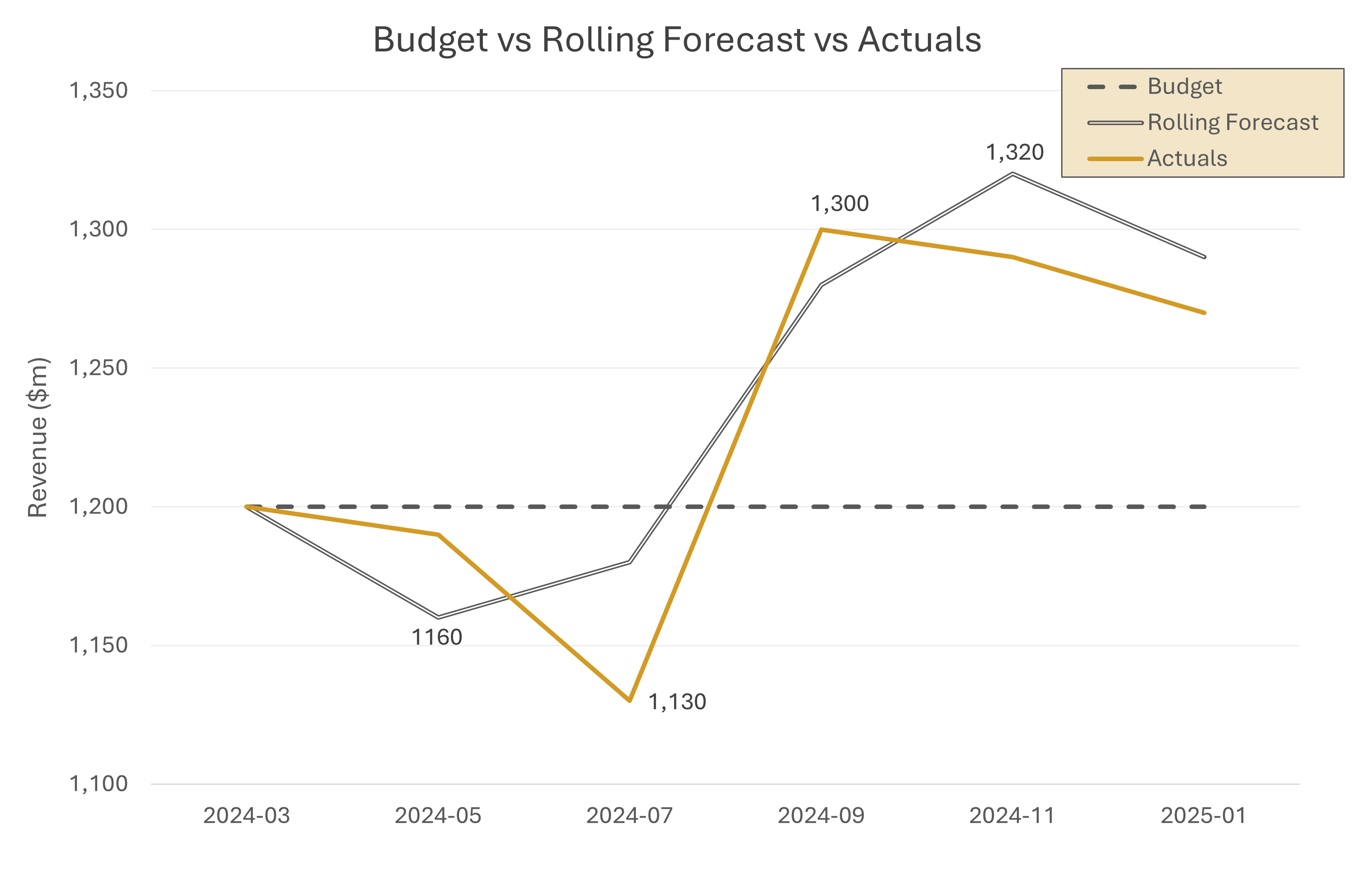
Notice how the rolling forecast line adapts month by month. It reduces surprises by reflecting emerging trends sooner than the static budget ever could.
Agility in forecasting isn’t just about the numbers; it’s also about speed and cadence.
The faster a forecast can be refreshed, the quicker leaders can respond to change. Here’s how most organisations benchmark today:
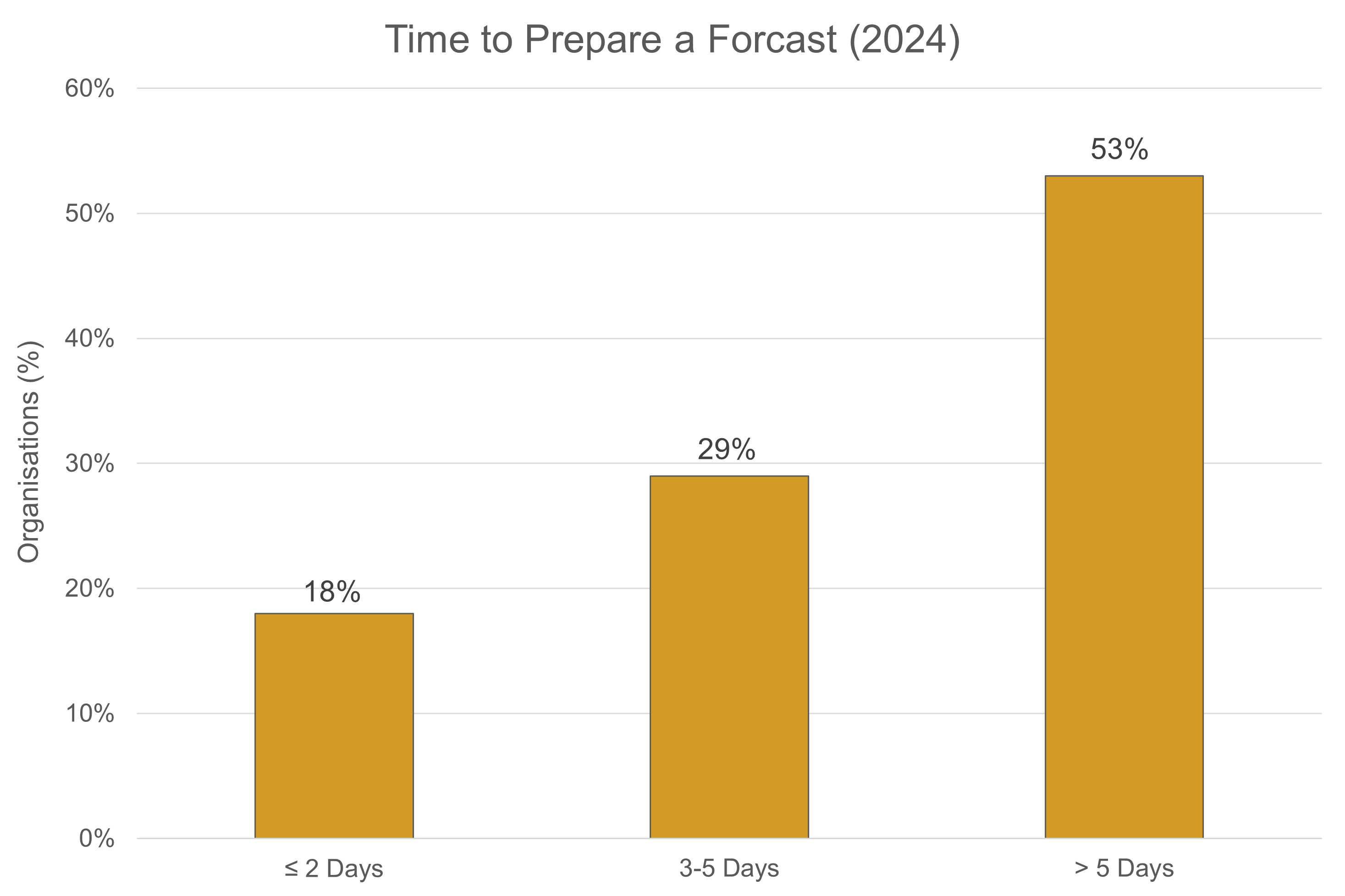
Almost half of the teams can refresh within two days, but many still take a week or more. By then, the insights risk being out of date.
Cadence matters as much as speed. Even if cycle times are short, infrequent updates leave blind spots. This swimlane shows how different teams refresh across the year:
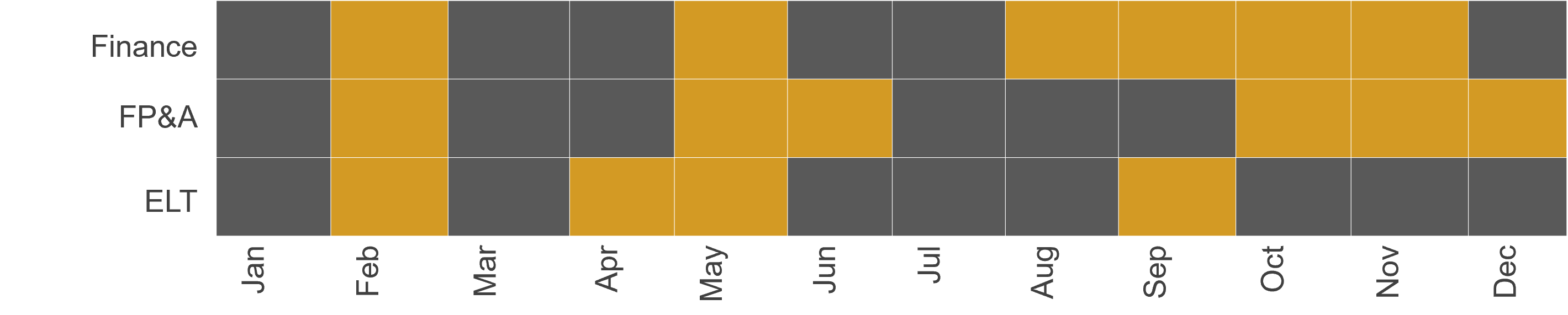
Teams that refresh monthly maintain a steady pulse, striking a balance between agility and effort. Quarterly or irregular cadences often lag behind business reality.
Finally, it’s worth looking at the mix of planning methods organisations use:
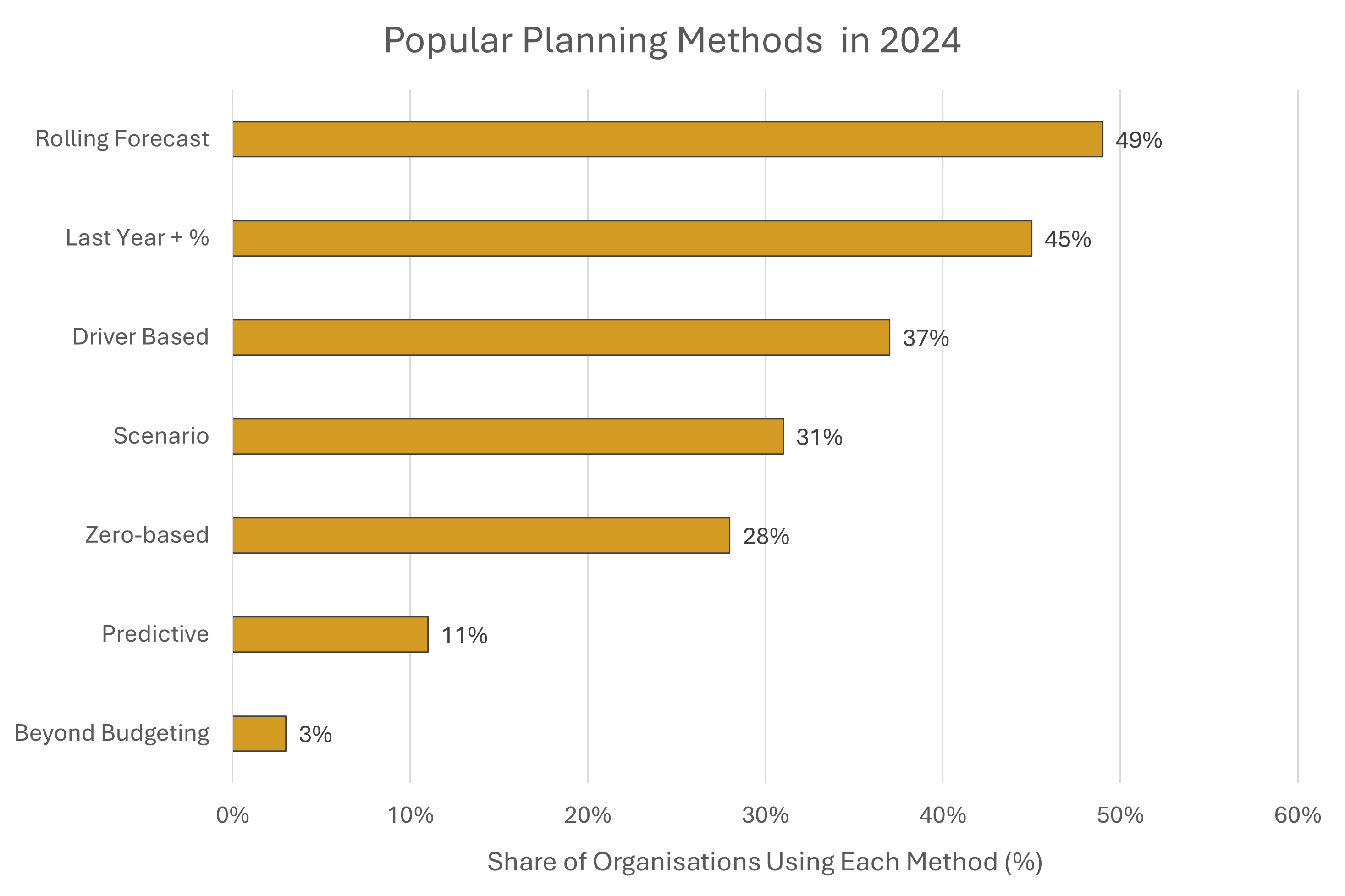
Annual budgets still dominate, but rolling forecasts and scenario planning are gaining traction. This shift reflects the need for both long-term anchors and short-term agility.
So what’s the answer? Innovative FP&A teams don’t choose one or the other; they use both. Budgets anchor expectations and provide accountability, while rolling forecasts keep plans relevant. Together, they strike a balance between stability and adaptability.
If you’re struggling to find the right balance between budgets and forecasts, you’re not alone. That’s why I developed Numerroo to help FP&A teams spend less time stuck in spreadsheets and more time generating insights that inform decisions.